Overview
I run a self-hosted homelab on Proxmox VE, fully automated with Infrastructure as Code.
The entire stack—from VM provisioning to service deployment—is managed by Terraform and Ansible, requiring only a single make all command to deploy from scratch.
Source code: [GitHub]
Architecture
The homelab follows a bastion host pattern. My local machine provisions a bastion VM, which then acts as the infrastructure controller for all internal VMs. Internal VMs are not directly accessible from outside—SSH access is restricted to the bastion only.
| VM | Role | Services |
|---|---|---|
| bastion-01 | Infrastructure controller | Terraform, Ansible |
| dns-01 | DNS | Unbound, AdGuard Home |
| proxy-01 | Reverse proxy | Traefik, Cloudflare Tunnel |
| app-01 | Applications | Docker, Prometheus, Grafana, Homepage, Personal Site |
Tech Stack
- Provisioning: Terraform (Proxmox provider) + Ansible (multiple vendored roles)
- Reverse Proxy: Traefik with Let’s Encrypt wildcard certificates (Cloudflare DNS challenge)
- DNS: Unbound (recursive resolver) + AdGuard Home (ad filtering)
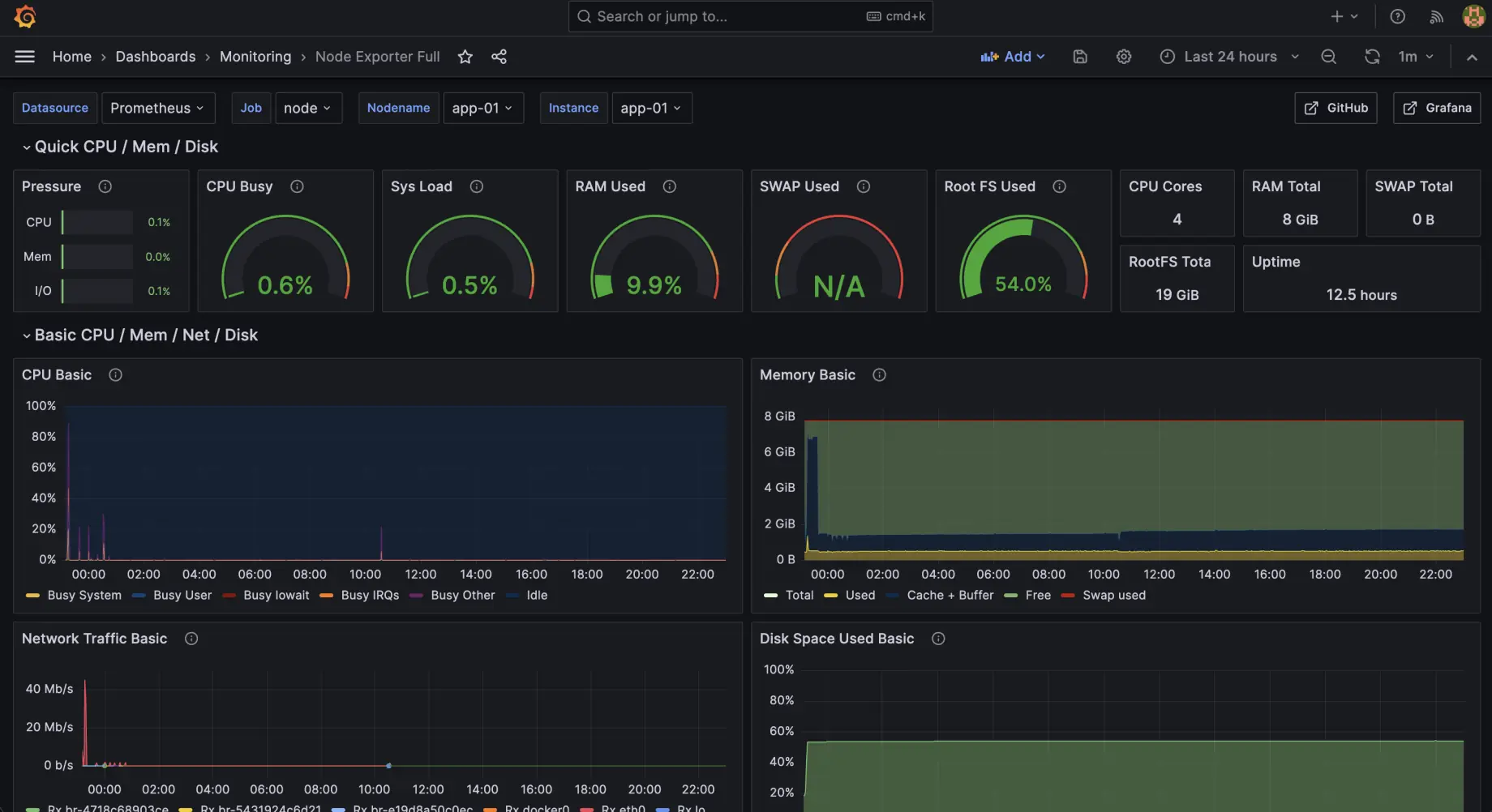
- Monitoring: Prometheus + Grafana + Node Exporter on all VMs
- Containers: Docker + Docker Compose
- System Config: Nix + Home Manager
- Public Access: Cloudflare Tunnel for selective service exposure
Key Design Decisions
- Single source of truth: All VM definitions, network settings, and service configurations live in one
cluster.yamlfile. Terraform, Ansible, and DNS records are all generated from it. - Security by default: UFW firewalls on every VM, SSH key-only authentication, internal VMs reachable only from the bastion, per-service IP whitelisting and basic auth via Traefik.
- Idempotent deployment: Running
make allon a fresh machine produces the same result every time.